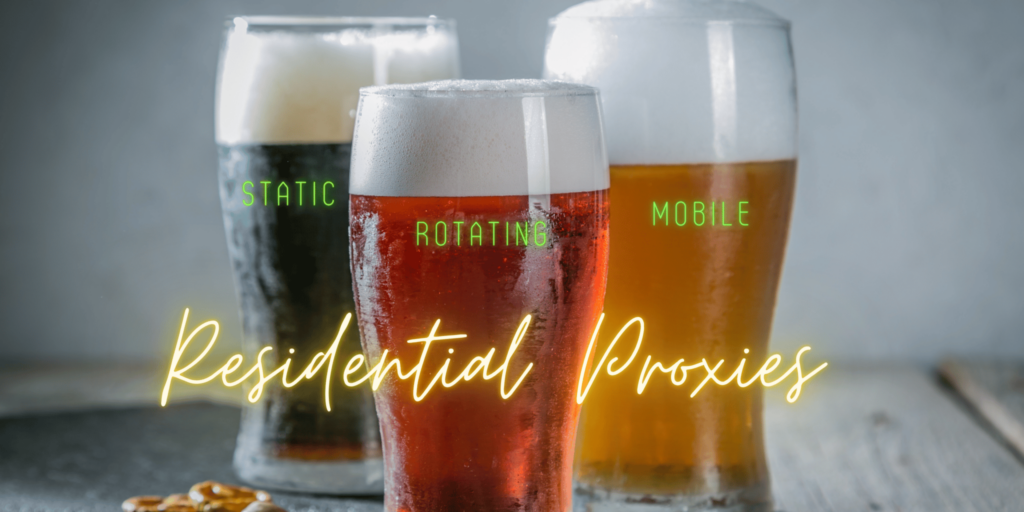
In this article, we will explore the different types of residential proxies and how they can be used to meet your needs.
Welcome to the world of residential IPs!
Have you ever wondered why they are so popular among businesses and individuals alike?
Residential IPs bypass geo-restrictions, keep online data secure and anonymous, and access restricted content.
The different proxy types also serve different purposes. For instance, some websites only allow you to scrape data using rotating IPs.
Intrigued?
There’s plenty more to go with that.
Let’s start from the beginning. Maybe you haven’t a clue what we’re even talking about.
What a residential IP is
A residential proxy is an intermediary server that hides a user’s IP address by routing their traffic through an IP address tied to a physical location.
People often use residential IPs to get around restrictions and see blocked content in a certain area. They are also used to hide a user’s identity and make internet browsing more private.
In short, you use the internet with the IP address of another real user device besides your own.
Overview of the proxy types
There are many ways to slice the residential IP pie. Often, you may hear about shared and dedicated proxies. Most proxy types tend to be shared, except for static ones.
- Rotating IPs: These proxy types are assigned a new IP address each time a request is sent. They are used for tasks that require frequent changing of IP addresses.
- Static IPs: These proxy types are assigned to a single user and remain the same for all requests sent through them. They are used for tasks requiring a single IP address for a long time.
- Mobile IPs: These proxy types are assigned to mobile devices. They are used for tasks that require a geographic location to be spoofed.
Rotating IPs
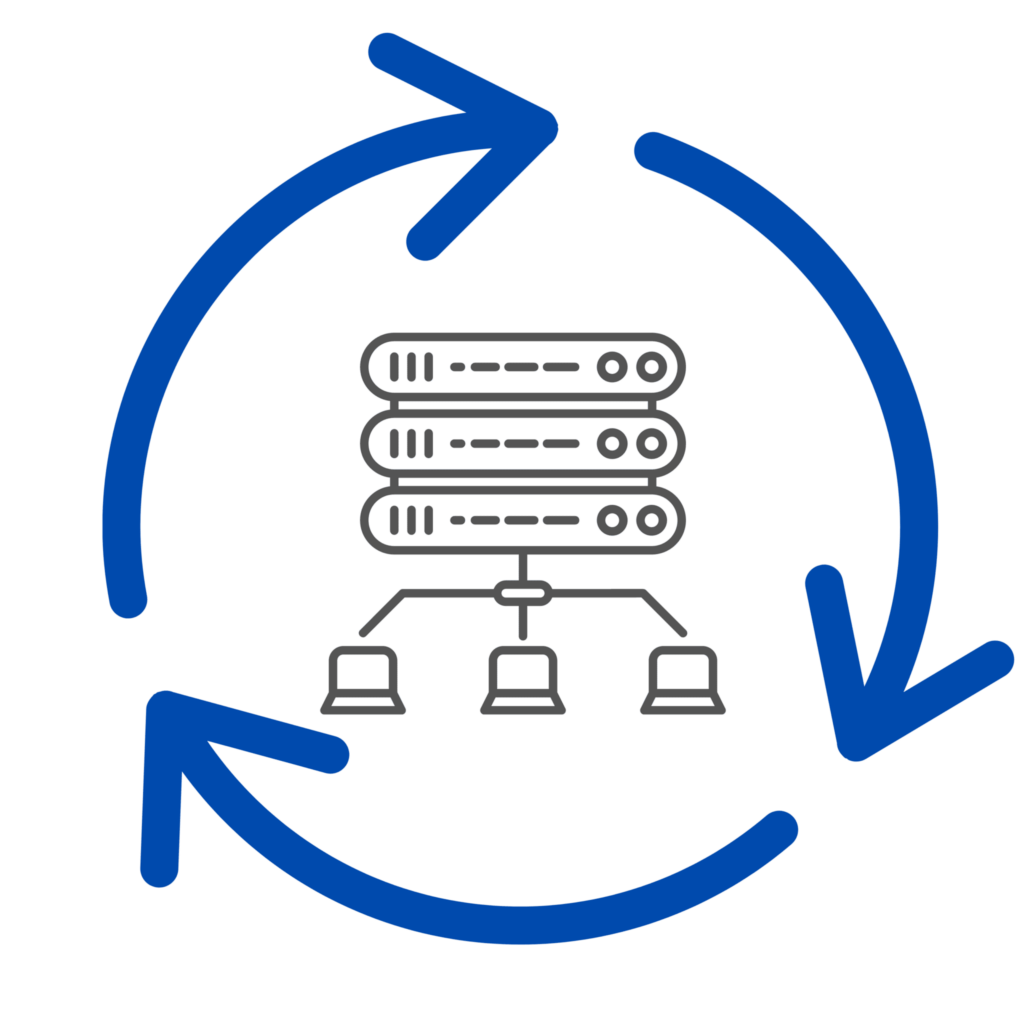
Rotating IPs are proxy servers that use IP addresses given by internet service providers (ISPs) or mobile carriers. These proxies route your web traffic through a residential IP address, which makes it appear as if you are browsing from a real residential home.
These proxy types are great for getting around geographical restrictions and keeping website owners from blocking your traffic or finding out who you are. It can also protect your identity and data while hiding your location.
Benefits
- Residential IPs offer high anonymity and privacy as they are connected to a real home network.
- They are much more reliable than other proxy types since they are less likely to be blocked or detected by websites or services.
- They can be used to access geo-restricted content and services, making them great for bypassing geo-blocks.
- They provide faster speeds and better performance than other types of proxies.
Drawbacks
- They can be expensive compared to other types of proxies.
- They are limited in terms of the number of IPs available and cannot be easily scaled up.
- They are less secure than other proxy types, as they are connected to a real home network.
Static IPs
Static residential proxies are a type of proxy that gives you a dedicated IP address usually used by home users. They are also known as ISP proxies because they come from internet service providers instead of datacenters.
These proxy types are useful for users who want to access websites that require a residential IP address or certain locations that other types of proxies may block.
Most of the time, static IPs are more secure and reliable than other proxies. This makes them a popular choice for people who need reliable access to the internet.
Benefits
- Faster and more reliable than datacenter proxies
- Easier to trust because they come from real IPs
- Can be used for a variety of tasks, such as scraping, geolocation and security
- More secure than datacenter proxies
Drawbacks
- More expensive than datacenter proxies
- Can be blocked by websites
- Can require more setup and configuration

Mobile IPs
Residential mobile proxies connect to mobile networks and let mobile devices access websites. They are used for the same thing as residential IPs, but you can access them from your phone.
Desktop residential IPs are tied to a fixed IP address, but mobile IPs are not. This makes them more anonymous. This makes them ideal for web scraping and data mining through mobile networks.
Benefits
- High level of anonymity as the IP address is associated with a real device
- Can be used to bypass geo-restricted content
- More reliable than datacenter proxies
- Can be used to access restricted websites and content
Drawbacks
- More expensive than datacenter proxies
- Limited availability in certain locations
- Slower speeds than datacenter proxies
- Require special software to be installed on the device
- IP addresses can be blocked or flagged as suspicious
Datacenter Proxies
These don’t count as residential IPs, but let’s discuss them to avoid any confusion.
Datacenter proxies are hosted on servers located within a data center. These proxies mask the user’s IP address and provide a high level of anonymity. (To an extent).
Depending on the provider, datacenter proxies have different features, such as shared or dedicated IP addresses, IP address rotation, and the ability to change the user’s location. They can also be used for online web scraping, getting to content, and other things.
Datacenter proxies are residential proxies that are not associated with a physical address.
Instead, they are hosted on virtual servers at datacenters worldwide.
Benefits
- Easy to set up and use: Datacenter proxies are relatively easy to set up and use.
- Cost-effective: Datacenter proxies are more cost-effective than residential proxies.
- High speed: Datacenter proxies can provide high speeds, allowing users to access the data they need quickly.
- Large pool of IP addresses: Datacenter proxies offer a large pool of IP addresses, which can be used to bypass website restrictions and access geo-blocked content.
Drawbacks
- Not as secure as residential proxies: Since datacenter proxies do not have a physical address, they are less safe than residential IPs.
- Lower security than residential proxies: Datacenter proxies are less safe than residential IPs because they are not tied to a physical address.
- Can be used in bad ways: Because datacenter proxies don’t have a physical address, they can be used by bad people.
Recap of the proxy types
There are different proxy types, such as mobile IP proxies, residential proxies that change, and ISP proxies.
- Dedicated IPs: Dedicated IPs provide the highest level of privacy, anonymity, and security compared to other proxy types. They are more expensive than shared IPs and require more setup, but offer the most reliable connection and speeds.
- Shared IPs: Shared IPs are cheaper than dedicated IPs but less secure and reliable. They provide decent speeds but are more likely to get blocked by websites than dedicated IPs.
- Rotating IPs: Rotating IPs provide the same level of privacy, anonymity, and security as dedicated proxies, but rotate IP addresses to make them more difficult to detect. They provide a good balance between security and reliability but can be expensive.
- Mobile IPs: Mobile IPs provide the same level of privacy, anonymity, and security as dedicated and rotating proxies but use mobile IP addresses to access websites. They are easy to set up and provide good speeds, but they can be more prone to blocks than other residential proxies.
The choice of residential IP type depends on a user’s particular needs and budget.
Dedicated IPs are the safest and most reliable. Shared and rotating proxies are less expensive and give you more options.
When choosing the right proxy types, it is important to consider what the proxy is for, how much privacy is needed, and how much it will cost.

Who you gonna call?
IPBurger’s residential proxies are the best choice for users who want safe and reliable Internet access or hide their IP address. Users can choose the best option from our static, rotating, and mobile options.
Users of IPBurger can be sure that their data is safe and can’t be tracked. This protects their privacy and lets them browse the web without worrying about being watched.
With IPBurger, you can be sure that you are surfing the web anonymously and securely.
Stop settling for generic proxies and get the residential proxies you deserve! With IPBurger’s static, rotating, and mobile IPs, you can trust that your IP address is always safe and secure!