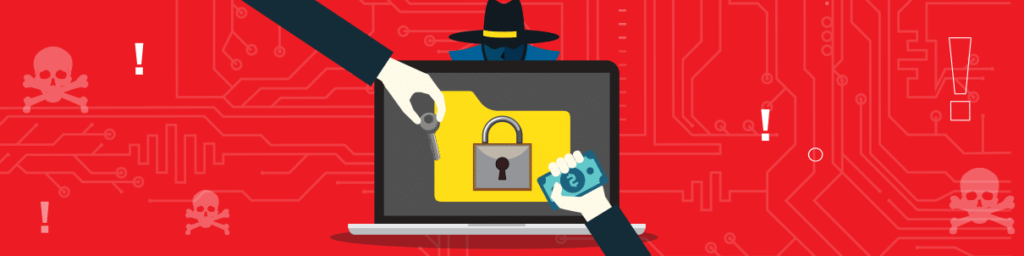
Ransomware attacks have been very common in the recent years especially in 2016, 2017 and last year. Although they haven’t hit the headlines lately, ransomware attacks still wreak havoc, and now they have shifted into other areas such as cryptocurrency. They can also go undetected till an attack has occurred due to recent upgrades and technological changes cybercriminals are building into them.
Qu'est-ce qu'un ransomware ?

Ransomware is a family of malware which generally decrypts or wipes off your files and then demands some hefty amount of money for a decryption key or for your files to be restored. In the recent years, once you have been attacked by ransomware, you get a note saying “your files have been encrypted and to access them, pay a certain amount of cryptocurrency to a given address.”
Most ransomware attacks are propagated through networks, or via Trojans that are disguised as legitimate files. Others have worm abilities and can move through networks and replicate themselves without user interactions.
The most commonly known variants of ransomware are encrypting ransomware – most common, non-encrypting ransomware – this restricts access to files but doesn’t encrypt them, leak ware – this type of ransomware also doesn’t encrypt your files but threatens to publish your sensitive information online, and lastly, mobile ransomware – this type attacks mobile operating systems.
Comment se protéger contre les ransomwares ?
Voici quelques conseils qui vous permettront de mieux faire face aux attaques de ransomware ;
- Do regular backups; Ransomware attacks are after data and having a good backup in the first place ensure you are immune to these attacks. But even backups can be attacked by ransomware if they are stored in the devices or connected to the internet. To avoid this, back up your data into a hard drive and disconnect it from your device once the backing process has finished.
- Be cyber aware; Ransomware attacks begin as a simple download, and in a matter of seconds, a whole organization can be infected. Always be keen on what you download online, avoid suspicious links and never open email attachments from people you don’t know. Also, avoid clicking on ads.
- Install the latest software updates and security patches; Ransomware attacks exploit vulnerabilities that are not patched. For instance, the Wanna Cry ransomware attack became a worldwide menace, and it attacked organizations which did not apply an update released by Microsoft earlier on.
Que faire si vous êtes victime d'une attaque par ransomware ?

La plupart des victimes sont prises de panique et, comme elles veulent récupérer leurs fichiers, elles s'empressent de payer la rançon. C'est parfois une bonne idée, lorsque c'est la seule option possible, et parfois une mauvaise idée. Nous allons voir en détail pourquoi ce n'est pas une bonne idée de payer. Mais voyons d'abord ce que vous pouvez faire ;
- Déconnectez-vous d'Internet et de tout réseau auquel vous êtes connecté. Cela empêche le ransomware de se propager s'il a des capacités de ver.
- Assurez-vous qu'il ne s'agit pas d'un scareware ; certaines attaques de ransomware ne chiffrent pas les fichiers de l'utilisateur même si elles prétendent le faire. Vérifiez toujours si vos fichiers sont inaccessibles.
- Use a decryptor; antivirus companies have decryptor tools that can help you recover files encrypted by certain.
- Restore from backup; do a fresh install and restore your files to a state before the ransomware attacked.
- Signalez l'incident ; il est bon d'informer les autorités compétentes et même les personnes de votre entourage qu'un ransomware circule.
Pourquoi ne jamais payer ?
Vous pourriez être contraint de payer la rançon pour récupérer vos fichiers, mais voici pourquoi vous ne devriez pas le faire.
- You might not get your files back; at times the ransomware may change as it propagates and loses its original purpose. In this case, even the authors don’t know how to decrypt your files, and they will continue demanding more money for nothing.
- Vous serez une cible facile. Une fois que vous avez payé, vous augmentez vos chances d'être à nouveau attaqué.
Utilisez toujours un VPN – IPBurger VPN

If you like accessing free public Wi-Fi, ensure that you have your VPN turned on. Some malware can be injected via the free public Wi-Fi, and some of it might be ransomware. A VPN encrypts your internet traffic and tunnels it through a secure server to its destination. The encryptions ensure that your internet traffic is not visible to prying eyes such as malicious actors.