Le dropshipping en 2026 n'a plus rien à voir avec celui de 2020. Le modèle a pris une ampleur sans précédent — le marché est passé de 330,86 milliards de dollars en 2025 à 401,41 milliards de dollars prévus en 2026, avec un TCAC de 21,3 %, et devrait atteindre 828,46 milliards de dollars d’ici 2030 — mais la stratégie qui a fait le succès des premiers acteurs du secteur n’est plus valable. L’arbitrage sur AliExpress avec une livraison en 14 jours et un thème Shopify générique est désormais un moyen sûr de perdre de l’argent en publicité.
La question intéressante n’est pas de savoir si le dropshipping fonctionne toujours. Il s’agit plutôt de comprendre comment ce modèle évolue, et de distinguer les fluctuations passagères des changements structurels sur lesquels il vaut la peine de s’appuyer. Voici à quoi ressembleront réellement les prochaines années, et où se trouvent les leviers d’action si vous gérez ou développez une boutique en ligne aujourd’hui.
Vous en avez assez que les interdictions d'adresses IP ralentissent vos opérations ? Déployez nos proxys résidentiels pour une rotation à grande vitesse ou nos proxys FAI sécurisés pour garantir la pérennité totale de vos comptes.
Tendance n° 1 : la découverte passe de la recherche au commerce social
Pendant la majeure partie de l'histoire du dropshipping, Google a été le principal canal de trafic. Ce n'est plus là que se trouve le volume.
TikTok devrait convertir 45,5 % de ses utilisateurs américains en acheteurs d’ici 2025, devançant ainsi Facebook (38,5 %) et Instagram (37,3 %) pour la deuxième fois consécutive. TikTok Shop a quant à lui atteint une valeur brute des marchandises de 33,2 milliards de dollars. La découverte, la décision d’achat et le paiement s’effectuent désormais au sein d’une seule et même application, souvent au cours d’une vidéo de 60 secondes.
Cela modifie le modèle opérationnel de trois façons :
- La rapidité de livraison n'est plus une option. Les règles strictes de TikTok Shop en matière de livraison imposent une exécution des commandes depuis les États-Unis dans un délai de 3 jours, sous peine de sanctions et de mauvaises évaluations pour les dropshippers. La livraison directe depuis AliExpress vers le client ne permet pas de respecter cette exigence. Le recours à un prestataire logistique tiers (3PL) national ou à un stock pré-entreposé constitue désormais le minimum requis.
- Le volume de contenu créatif constitue le principal frein. Une boutique qui ne parvient pas à produire entre 5 et 10 vidéos courtes par produit et par semaine est structurellement désavantagée. C’est pourquoi les outils vidéo basés sur l’IA sont passés du statut de simple gadget à celui de norme.
- La stabilité du compte est d’autant plus importante. Lorsque l’ensemble de votre entonnoir de conversion passe par le flux algorithmique d’une seule plateforme, un simple signalement de compte peut anéantir votre activité du jour au lendemain.
Évolution n° 2 : l'IA a redéfini les règles du jeu en matière de compétitivité
L'IA n'a pas simplifié le dropshipping : elle a relevé le seuil d'accès et repoussé les limites bien plus loin.
La recherche de produits, qui prenait auparavant une semaine, ne prend désormais qu'un après-midi. Les plateformes d'analyse des tendances basées sur l'IA identifient les produits en plein essor avant même qu'ils n'apparaissent dans les classements grand public. La création de publicités est passée de plusieurs jours à quelques minutes. Les descriptions de produits générées par l'IA, les visuels illustrant des modes de vie et l'assistance par chatbot sont désormais des éléments indispensables, et non plus des facteurs de différenciation.
Conclusion : la rapidité d’itération est le nouvel avantage concurrentiel. Comme l’a souligné un analyste du secteur : « L’IA ne réduit pas les barrières à l’entrée — tout le monde a accès aux mêmes outils. Ce qu’elle fait, c’est repousser les limites. » Les magasins qui testent 30 produits par mois grâce à des processus assistés par l’IA surpasseront ceux qui continuent à effectuer des recherches manuelles, quelle que soit la personne qui sélectionne les « meilleurs » produits sur le papier.
Le corollaire, souvent négligé : plus votre flux de travail repose sur des outils automatisés — extraction des publicités des concurrents, suivi des prix des fournisseurs, analyse des avis pour évaluer le sentiment, publication sur plusieurs comptes —, plus votre infrastructure (rotation d’adresses IP, isolation des comptes, gestion des empreintes numériques) revêt une importance capitale. L’IA permet de multiplier le volume de travail que vous effectuez ; elle ne vous protège pas contre la détection par les plateformes.
Tendance n° 3 : les marges sont sous pression des deux côtés
Deux tendances se rejoignent de manière inquiétante :
- Des droits de douane de base compris entre 31 et 45 % environ restent en vigueur entre les États-Unis et la Chine, et les experts prévoient que de nouveaux droits de douane, pouvant atteindre 40 %, pourraient encore être imposés. Les fournisseurs répercutent ces coûts sur leurs clients.
- Les coûts publicitaires sur Meta ont augmenté d'environ 30 % depuis 2022, et les attentes en matière de ROAS ont évolué : alors qu'un ROAS supérieur à 3 était auparavant la norme, un ROAS compris entre 2 et 2,5 est désormais considéré comme acceptable pour de nombreux produits.
Hausse du coût des marchandises, hausse du coût d'acquisition. L'époque où l'on vendait un produit à 4 $ pour 29 $ avec un ROAS de 5 est révolue pour la plupart des catégories. Les boutiques qui survivent sont celles qui présentent au moins l'une des caractéristiques suivantes : un panier moyen plus élevé grâce à des offres groupées, des catégories de produits suscitant des achats répétés, des emballages de marque justifiant des prix élevés, ou des canaux propriétaires (listes d'e-mails/SMS) qui réduisent la dépendance vis-à-vis du trafic payant.
4e étape : La course à l'armement entre les plateformes et les comptes s'intensifie
C'est là le changement structurel que la plupart des opérateurs sous-estiment. Amazon, eBay, TikTok Shop, Etsy et PayPal ont tous considérablement renforcé, au cours des deux dernières années, leurs mesures de lutte contre la gestion de comptes multiples, l'utilisation d'empreintes numériques et les restrictions géographiques.
Les raisons pour lesquelles vous auriez besoin d'une séparation des comptes en 2026 sont plus légitimes que jamais :
- Expansion géographique. La plupart des places de marché limitent encore les ventes transfrontalières. Pour gérer une boutique destinée aux acheteurs britanniques depuis une entreprise basée aux États-Unis, il est souvent nécessaire de disposer d'une présence locale conforme aux exigences de la plateforme.
- Séparation des catégories. Gérer une boutique de mode et une animalerie à partir d'un seul compte affaiblit les indicateurs de performance et expose à deux types de risques à la fois.
- La résilience face aux suspensions. Les plateformes procèdent à des suspensions pour des raisons qui vont de tout à fait valables à totalement incompréhensibles. Une seule suspension ne devrait pas mettre fin à l'activité.
- Tests et mise à l'écart. Les tests de nouveaux produits effectués sur un compte distinct permettent d'éviter de mettre en péril la réputation d'une boutique déjà bien établie.
Ce qui a changé, ce sont les critères techniques. Les plateformes prennent désormais en compte l'adresse IP, l'empreinte du navigateur, l'historique des cookies, les caractéristiques de l'appareil, le prestataire de paiement et les habitudes de navigation. « Même si l'un de vos comptes est banni, tout autre compte qui y est lié le sera également » : ce n'est pas une politique restrictive, c'est un processus automatisé et impitoyable.
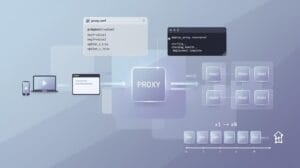
Pour les opérateurs gérant plusieurs boutiques en ligne légitimes, cela signifie que la couche d’infrastructure revêt une importance capitale : des adresses IP résidentielles « propres » attribuées à chaque compte, des sessions persistantes qui reflètent le comportement réel des utilisateurs, un ciblage géographique correspondant à l’emplacement déclaré de la boutique, ainsi que des environnements de navigation isolés. Il s’agit là du socle opérationnel sur lequel repose tout le reste — et c’est précisément sur ce plan que la plupart des opérateurs utilisent encore des configurations datant de 2020 face à des systèmes de détection de 2026.
Ce que cela signifie si vous prévoyez de vous développer en 2026
« L'avenir du dropshipping » n'est pas vraiment une question de tendances. Les éléments sont déjà visibles. Les acteurs qui s'imposeront d'ici 18 mois mettent déjà en œuvre les mesures suivantes :
- Choisir des catégories offrant des marges structurelles — bien-être, animaux de compagnie, articles ménagers durables, marchés de niche pour passionnés — plutôt que des produits de grande consommation, un segment où Temu et Shein ont déjà pris le dessus.
- Mettre en place une infrastructure créative leur permettant de produire plus de 50 vidéos courtes par mois sans s'épuiser.
- Gérer directement la relation client par e-mail, SMS et (dans la mesure du possible) via leur propre boutique en ligne, même si TikTok sert de plateforme de découverte.
- Investir dans la couche d'infrastructure: des partenaires logistiques capables d'expédier les commandes en 3 jours, une architecture de comptes capable de résister à une suspension, et une rotation des adresses IP résidentielles permettant de garantir la transparence des opérations multi-boutiques.
C'est ce dernier point qui est le plus souvent négligé, jusqu'à ce qu'il soit trop tard. Lorsque la plateforme signale le compte n° 1 parce qu'il partage une empreinte digitale avec le compte n° 2, le mal est déjà fait. Résoudre ce problème de manière proactive — à l'aide de proxys résidentiels, de profils de navigateur isolés et d'une bonne hygiène de session pour chaque compte — est un travail fastidieux et peu attrayant. C'est aussi ce qui distingue une entreprise qui se développe de manière exponentielle d'une entreprise qui doit repartir de zéro tous les six mois.
La solidité de votre entreprise dépend de la disponibilité de vos proxys. Optez pour des proxys ISP statiques de niveau professionnel afin de bénéficier de débits dédiés et d'une fiabilité à toute épreuve. OU déployez des proxys résidentiels rotatifs et atteignez un taux de réussite de 99,9 % en matière de scraping.