Billions of users worldwide rely on smartphones to performs various tasks. Many of the tasks include using internet services. This also means that millions of users may be vulnerable to cyber-attacks since cybercriminals have utilized the smartphone population to propagate various attacks. Every year, the number of mobile threats (malware) keep increasing.
Besides malware, cybercriminals can also hack into your other devices and other accounts if they hack into your phone. In this article, we’ll look at major mobile threats and ways of protecting yourself against them.
 Logiciels publicitaires, logiciels gris et logiciels espions
 Logiciels publicitaires, logiciels gris et logiciels espions
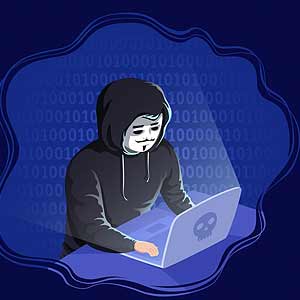
Apart from majoring on the desktops, adware has also invaded smartphones, and they can be annoying as well as intrusive. Adware collects your data without your knowledge and uses it to bombard you with retargeting ads. The adware usually works in conjunction with spyware and grayware. Although grayware is on the lower scale of threats, spyware, however, pose a great threat to your privacy and security. Spyware apps collect any information from your phone including SMS, call logs and records, your gallery, use your mic and camera, access location services and even use your internet without your knowledge.
 Hameçonnage
 Hameçonnage
Phishing scams are still a threat, and smartphone users have not been left out. Phishing scams use various ways including deception to gain access to unsuspecting users’ personal information such as phone number, address, and even financial information. Besides using emails, phishing scams have now migrated into mobile apps – via counterfeit apps that look like legitimate apps. Once installed, these apps ask for various permissions that are not necessary. For instance, you might find a flashlight app asking permission to access your network, internet, contacts, SMS, and location services. With this access, these apps secretly collect personal information.
 Virus et chevaux de Troie
 Virus et chevaux de Troie
Tout comme les applications de phishing, les virus et les chevaux de Troie accèdent également aux informations stockées dans votre smartphone. Ils peuvent être présents dans les applications piratées et les fausses applications. Outre la collecte d'informations, ils peuvent également envoyer des messages textuels qui peuvent être coûteux et ruiner votre réputation.
Téléchargements "drive-by" (par inadvertance)
This is any malware or virus that is downloaded or installed unintentionally into your device without your consent. Drive-by downloads occur in various ways but mostly through visiting malicious websites or installing updates from unknown sources. Once the download is executed, the malware automatically injects itself to your device and begins to wreak havoc. Injected malware may range from spyware to other grayware.
Moyens de se protéger contre ces menaces
Les menaces mobiles sont dangereuses et peuvent causer des dommages inimaginables. Bonne nouvelle, vous pouvez protéger votre appareil contre elles et voici comment ;
Mise à jour de votre smartphone
Smartphone manufacturers release security updates that are meant to fix and patch vulnerabilities that can be exploited by hackers and various malware. Always keep your device up to date by installing the updates once they become available.
Utiliser les boutiques d'applications officielles
Téléchargez et installez toujours des applications provenant des magasins d'applications officiels, à moins qu'elles ne fassent l'objet de restrictions dans votre région. Les magasins d'applications officiels disposent de mécanismes de sécurité et de directives strictes qui empêchent les applications malveillantes et malveillantes d'être introduites dans le magasin d'applications. Les boutiques d'applications tierces ne disposent pas de ces mécanismes et autorisent la plupart du temps des applications malveillantes.
Désactiver l'option d'installation d'applications inconnues
Les smartphones Android disposent d'une option qui permet aux utilisateurs d'installer des applications inconnues. Cette option est essentielle pour permettre aux développeurs de tester leurs applications avant de les publier officiellement. Les utilisateurs peuvent également utiliser cette option pour installer des applications qui ne proviennent pas des magasins officiels. Cette option est parfois dangereuse lorsqu'elle est activée, car les téléchargements "drive-by" peuvent s'installer d'eux-mêmes.
Définir judicieusement les autorisations
Les applications offrent diverses fonctionnalités en accédant à des ressources spécifiques de votre smartphone. Les autorisations limitent généralement ces ressources. Les applications malveillantes demandent généralement des autorisations inutiles pour voler vos données et utiliser des services qui peuvent s'avérer coûteux. Définissez toujours les autorisations avec prudence.
Utiliser un logiciel de sécurité mobile
Les smartphones nécessitent également un logiciel antivirus et antimalware pour les protéger contre les applications malveillantes, les logiciels malveillants et les virus. N'oubliez pas non plus d'effectuer des mises à jour régulières.
 Utiliser un VPN - IPBurger VPN
A VPN helps protect your internet connection when surfing the internet. It uses strong encryptions standards which encrypt your internet traffic and securely tunnel it through the VPN servers to the open internet. This makes your internet connection invisible to prying eyes such as cybercriminals. This makes a VPN a good option to use when you are connecting to public Wi-Fi.